Walk into any kind of hectic workplace in Maitland on a summer season mid-day and you'll see why emergency treatment abilities matter. Heat, devices, ladders, website traffic, sporting activity on weekends, youngsters at netball, grandparents at the marketplaces, bush routes just outside town. Life here keeps individuals moving, and in some cases scooting. When a person unexpectedly collapses at the gym or a colleague disjoints a shoulder at Jubilee Oval, the individual that steps forward with calmness, competent hands can change the entire tale. That result often traces back to a well-run class where the trainer saw your technique up close, corrected your hand position, and gave you comments you bear in mind months later.
Small course dimensions, done properly, transform "I assume I recognize" into "I can do this." I have seen it continuously throughout first aid training in Maitland: students in groups of eight to twelve pick up skills much faster, keep them much longer, and do far better under pressure than those in jampacked lecture-style sessions. If you are weighing an emergency treatment course in Maitland, put course dimension and method time high on your checklist.
What small classes really change
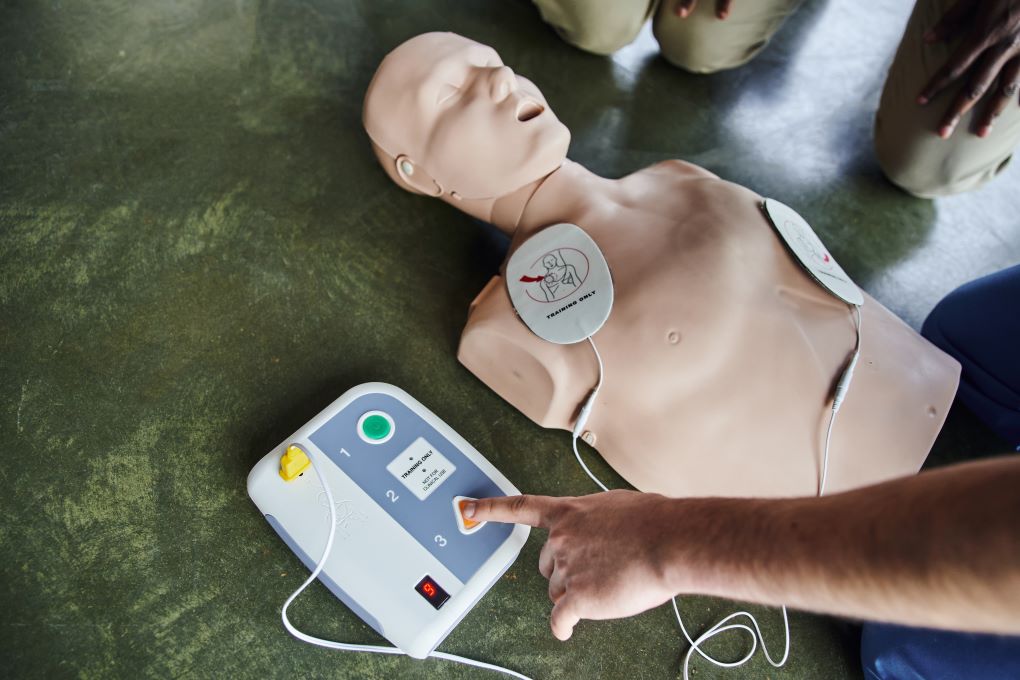
The advantage is not simply comfort. It is quantifiable. In CPR training Maitland homeowners usually show up with diverse self-confidence levels. A small team indicates every individual cycles with the manikins numerous times, each round getting accurate mentoring on depth, price, recoil, and hand placement. You do not wait half an hour for your turn, and you do not leave questioning if you were doing it right.
I bear in mind a morning class where a regional child care employee had a hard time to compress past 3.5 centimetres on a grown-up manikin. She fidgeted and except stature. With time and client mentoring during the Maitland emergency treatment course, we changed position and shoulder placement, switched manikins for one with more sensible resistance, and utilized a comments gadget to show performance in real time. By the 3rd cycle she hit five centimetres regularly. That adjustment does not happen in an area of thirty where the trainer is competing the clock.
Small classes likewise alter the discussions we can have. In an emergency treatment and CPR training course Maitland learners usually raise certain worries, like bronchial asthma around the Mount Vincent tracks or snake attacks near the river. With room for questions, we talk with local situations and the specific actions that matter, not only the textbook version. People entrust sensible judgment anchored to where they live.
What a well-structured day of training looks like
Most Maitland emergency treatment courses mix 3 components: sharp concept, practical scenarios, and hands-on drills. Good fitness instructors weave these cleanly so the day never bogs down.
- Practical rhythm: In a high quality emergency treatment course Maitland individuals will certainly toggle in between brief theory ruptureds and practice blocks every 20 to 40 mins. That maintains focus high and abilities sticky. Anticipate to use what you learned promptly, not an hour later. Repetitions that count: You must cycle via adult CPR, kid CPR, infant CPR, and an AED drill with enough repeatings to develop muscular tissue memory. A tiny group suggests at the very least two or three complete collections per learner. Your chest compressions must be tiring by the end, not merely demonstrated. Context switching: Trainers who know Maitland rotate scenarios: farm injury, backyard BBQ melt, water-related incident from a lake day, a pale at Stockland Environment-friendly Hills. Context changing imitates the cognitive load you feel in genuine life. Debrief society: After each scenario, expect a brief debrief: what functioned, what missed, what would transform in the evening, when solo, or if the casualty is a member of the family. This is where judgment forms.
When these aspects line up, first aid training in Maitland really feels purposeful. You drive home with a silent feeling that you can take care of the initial two disorderly mins of an emergency situation up until help arrives.
Local rhythms, neighborhood risks
The Reduced Hunter has its peculiarities. Summer warmth pushes dehydration and warm exhaustion. Weekends bring call sport, motorsports, and route riding. Many locals split time in between office and workshop, where hands obtain caught and eyes require flushing. Water is part of life: creeks, yard swimming pools, coastal trips a brief drive eastern. CPR program Maitland programs that disregard these information teach a generic variation of treatment. The better ones, consisting of leading suppliers like First Aid Pro Maitland and other well-known fitness instructors, focus their practical situations on what Maitland individuals actually face.
Water-related events issue here. An excellent cpr correspondence course Maitland participants attend ought to consist of a drill on removing somebody from superficial water and starting compressions on a company surface area. Burns are common also, from campfire mishaps to cooking area oil flares. In the appropriate Maitland first aid training, you will exercise cooling methods with time markers and talk through when a melt ends up being a concern transfer to a specialised unit.
Then there are poisonous attacks. While significant serpent attacks are rare, it is not unusual to satisfy a volunteer bush treatment worker or path runner who inquires about stress immobilisation. An instructor who recognizes the area will set out bandages and run that drill until people can use also stress from toes to thigh without spaces or wrinkles. The emergency treatment and mouth-to-mouth resuscitation programs Maitland hosts that stick to glide decks miss out on these important locals-only details.
The qualification question, addressed straight
People usually ask two points: will a Maitland first aid program certify me across the country, and how long does the emergency treatment certification Maitland employers request for remain valid? The short version: choose a carrier with nationally recognised devices of proficiency that map to criteria utilized across Australia. For several roles, the device for Supply Emergency treatment and the separate unit for Give Cardiopulmonary Resuscitation are the criteria. CPR money is normally rejuvenated annually by excellent method, while the more comprehensive emergency treatment credential is commonly restored every three years. Always examine your workplace policy. Medical facilities, very early childhood years solutions, handicap support companies, and some contractors might establish stricter refresh cycles.
If you educate with a reliable carrier in Maitland, your credential will certainly read the like one issued in Sydney or Brisbane. What modifications is where and exactly how you found out the product, not the value of the certificate itself.
Time, cost, and what you truly pay for
Price issues, however the actual expense is a poor discovering experience that squanders a day and leaves you unclear. A first aid course in Maitland that caps enrolments and runs a full method routine may cost a bit greater than a mass session. In exchange, you get more turns at the manikin, more instructor get in touch with, and a smoother evaluation experience. On a hourly basis, tiny classes usually deliver a lot more reps per dollar, which is exactly what constructs competence.
Time-wise, clever suppliers provide adaptable options. Some run blended learning with pre-course on the internet modules, cutting class time to a concentrated half day. Others arrange very early beginnings to release your afternoon or evening sessions for change employees. If a program promises a lightning-fast experience, ask what that means for practice volume. Speed has a place, however not if it cuts the drills you actually need.
How CPR practice becomes real skill
CPR is the most physical item of a Maitland first aid training course. Method breaks down under stress and anxiety and tiredness. People lean, secure their elbows incorrect, or compress also shallowly once they tire. That is fixable, and tiny classes fix it faster.
We use feedback manikins that show deepness and price, after that coach you to strike 100 to 120 compressions per min with complete recoil. A metronome or music track helps. We speak about hand adjustments every 2 mins and swap rescuers at the AED rhythm. We mimic an unpleasant environment - gravel, wet yard, a cramped lounge room - and chat through cushioning under knees, moving furniture, and staying clear during shocks. By the end of a solid mouth-to-mouth resuscitation course Maitland learners can provide two minutes that would make a paramedic nod. That is the bar worth aiming for.
If you are returning for a cpr refresher course Maitland companies frequently condense the theory and spend a lot of the moment on drills and updates: modifications to compression-to-ventilation ratios for infants, brand-new support on agonal breathing recognition, refinements to AED pad positioning for youngsters. Anticipate much less speaking and extra sweating. The whole point of refresher courses is to dirt off corrosion and secure recency.

First aid for kids and babies: where information matters
Parents, teachers, and coaches typically show up nervous about baby mouth-to-mouth resuscitation. The maneuvers are different, and the risks really feel higher. Great first aid and cpr Maitland courses clear that worry by placing baby manikins in your hands early and commonly, instructing two-finger compressions, gentle head tilt, and determined puffs. We exercise choking relief with back blows and chest thrusts, discuss formula desire versus toy obstruction, and cover common diseases like croup and febrile seizures. Information issues: exactly how to count compressions without hurrying, exactly how to find fatigue in a kid after a rescue, when to call an ambulance right away.
Small groups aid right here greater than anywhere. Instructors can view your strategy up close and adjust angles a couple of millimetres. That is the distinction between doing it technically correctly and doing it with true control.
What to anticipate from assessment, without surprises
Assessment in a Maitland emergency treatment training session ought to seem like an expansion of method, not a catch. Generally you complete a knowledge element, which may be an online quiz or a brief in-person check, followed by practical demos. The most effective trainers frame this honestly from the beginning: what will certainly be evaluated, how to pass, where to get more practice if you are not ready yet.
In little mates, analysis can be paced kindly. If you need an additional go for the AED drill, there is time. If bronchial asthma monitoring steps obscure in your head, we stroll it once again with placebo inhalers and spacers up until the sequence is clean. Nobody needs to leave guessing whether they met the standard.
Facilities, devices, and the quiet details that matter
You can tell a lot concerning a service provider when you walk into the room. Are the manikins clean and operating, with lungs changed lately? Exist sufficient systems that learners are not sharing one in between 4? Do trainers bring several plaster kinds for serpent bite technique, not simply a solitary crepe roll? In Maitland, venues range from community halls to committed training areas. A good arrangement consists of AED fitness instructors that mirror typical local designs, barriers and handwear covers in every set, and noticeable waste bins for made use of wipes. The small things signal care.
Ask concerning the trainer-to-learner ratio. In a top quality Maitland first aid training course, a solitary instructor can conveniently handle eight to twelve learners for hands-on sessions. If numbers creep higher, a 2nd trainer or assistant keeps the standard.
Choosing the best program for your goal
Not all first aid training courses Maitland deals are identical. Some focus directly on office conformity, others lean more toward family-focused circumstances. If you train community sport, look for extra focus on strains, cracks, dental injuries, and blast. If you work in education or impairment support, inquire about anaphylaxis and bronchial asthma management depth, and whether the course consists of role-play with real tools like EpiPens and spacers.
For professions and field work, prioritize bleeding control, crush injuries, eye irrigation, and remote reaction preparation. If your task consists of risk of opioid exposure - rare however not unheard of in some setups - ask whether naloxone understanding is gone over. The right Maitland first aid course respects the truths of your day, not just the textbook outline.
The case for a local trainer
National web content should correspond, yet regional instructors add texture you do not get elsewhere. They recognize where ambulances phase, ordinary action times, and what triple no call-takers will ask. They can chat via directing an ambulance to a hard-to-find rural driveway, managing a casualty on a steep brink, or maintaining onlookers beneficial rather than crowding. I have actually listened to instructors provide step-by-step assistance on exactly how to recruit assistance in a grocery store aisle: factor, name the person in the blue t-shirt, designate the call, designate the AED access, assign crowd control. That specificity sticks.
Providers like First Aid Pro Maitland and various other established teams tend to hire fitness instructors with field histories, from paramedics to seasoned initial -responders. When they share genuine instances, anonymised and respectful, you obtain the type of edge-case judgment that does not fit neatly on a slide.
Blended understanding, without the shortcuts
Blended distribution can be exceptional when it keeps concept at home and preserves hands-on time in course. Reviewing shock physiology online functions penalty. Practicing shock positioning, warming up, and confidence does not. If an emergency treatment training Maitland company uses a four-hour combined format, ask just how much of that is drills. A healthy balance feels brisk but calm. You wish to arrive having actually cleared the understanding checks to make sure that class time becomes a circuit of scenarios and skill stations.
A strong mixed path commonly looks like this: a couple of hours of self-paced theory, then a half day in class with turning stations covering DRSABCD, mouth-to-mouth resuscitation throughout age groups, AED, choking feedback, bleeding control including tourniquets and haemostatic dressings if readily available, burns, cracks and sprains, clinical emergencies like stroke and cardiac arrest acknowledgment, and environmental issues like warmth illness. When that arc is appreciated, mixed learning is a win.
Retention: what sticks months later
People bother with neglecting. They should. Skills degeneration is actual. The most effective vaccination is overlearning throughout your Maitland first aid course integrated with a basic maintenance practice: revisit the core actions monthly. That can be a five-minute psychological run-through of DRSABCD while you make coffee, a quick scan of your first aid package to advise on your own where gloves live, or a two-minute compression drill on a padding to rejuvenate muscle memory. It seems small, yet it helps.

Refreshers exist for this reason. A yearly CPR check-in maintains the physical skill fresh. Rolling a complete Supply First Aid training course every three years resets you on procedures that move gradually. When you come back, the material will certainly feel familiar in the right way, and the modifications will certainly be small.
What good judgment looks like on a real Maitland day
Picture this: Saturday football at Lorn. A player collides mid-air and drops, not moving. You reach him initially. A strong emergency treatment and mouth-to-mouth resuscitation training course Maitland experience has pierced three habits right into you. Initially, scene check and onlooker control, after that faucet, shout, and seek breathing that is regular, not just any chest motion. Second, if breathing is absent or agonal, start compressions and instruct a person clearly to get hold of the club's AED from the club. Third, maintain matter and swap rescuers when you tire, positioning pads as soon as they show up, getting rid of for shock promptly.
Nothing fancy there. The distinction is tempo and assurance. You are not guessing whether to roll him or whether those gasps are normal. You do not float waiting https://codyvmuw755.iamarrows.com/maitland-emergency-treatment-emergency-situation-readiness-for-the-neighborhood for a qualified complete stranger. You relocate. That is why little classes issue: you have actually carried out that specific sequence sufficient times that your hands know before your mind completely captures up.
Change the domain to a yard melt from tipping hot oil or a collapsing customer on a hot mid-day at Rutherford. The rhythm stays: safety and security, action, phone call, care. When local first aid training classes the steps are easy and baked in, you can save attention for the human side - holding a hand, talking steadly, asking the best questions for the ambulance, keeping children off the beaten track. Those soft pieces usually make a decision how the scene really feels, and they are easier when you are qualified with the hard skills.
What to bring, what to wear, just how to prepare
Pack light. Use comfy clothing you can kneel in, due to the fact that you will be on the flooring for mouth-to-mouth resuscitation. If you have knee concerns, bring a small pad or ask the trainer for one. Link back lengthy hair, trim jewelry that could catch on plasters, and bring a canteen. Total any kind of pre-course analysis truthfully; it reduces explanations and maintains method focused. If English is a second language, do not be reluctant regarding telling your instructor. Good instructors speed their words and can show more than they inform. If you have a shoulder or wrist injury, flag it. There are methods to demonstrate technique safely while still meeting assessment.
If you are restoring your emergency treatment certification Maitland workplaces could approve your prior discovering proof for some components, however anticipate to show complete capability in CPR and time-critical abilities. Prepare to sweat a little. It is a great sign.
Why small classes maintain paying dividends
When you leave a small-group course, you bring greater than a budget card. You lug a memory of doing it right, start to complete, with an instructor seeing and leading till the items clicked. Weeks later, dominating a colleague who has just slipped on a damp floor, that memory comes to be action. You will measure the scene, recruit aid by name, and start the sequence. If a spectator second-guesses you, you will keep going because your hands remember. That self-confidence does not come from reading alone. It originates from practice knotted with feedback. Which is precisely what tiny class dimensions get you.
Getting started in Maitland
Maitland has a healthy and balanced mix of suppliers and timetables. If you need a weekday course near the CBD, if you desire a Saturday slot prior to the mid-day sporting activity run, or if your team requires onsite training at a workshop south of town, there are options. Seek out trainers that cap numbers, advertise plenty of hands-on time, and dedicate to realistic circumstances. If you see a training course summary that reads like a lecture, keep looking.
For a first aid course Maitland locals can rely on, ask a couple of simple concerns before you publication: Just how big is the class? Just how much time is on the manikins? Do you cover regional situations like warm health problem and serpent bite? What design of AED do you educate with? Exactly how typically do students cycle through each skill? Clear, practical solutions suggest you have actually discovered the appropriate fit.
When you do, allot the day and lean in. The results have a tendency to be big, also when the area is small.